
Our Disciplic Succession: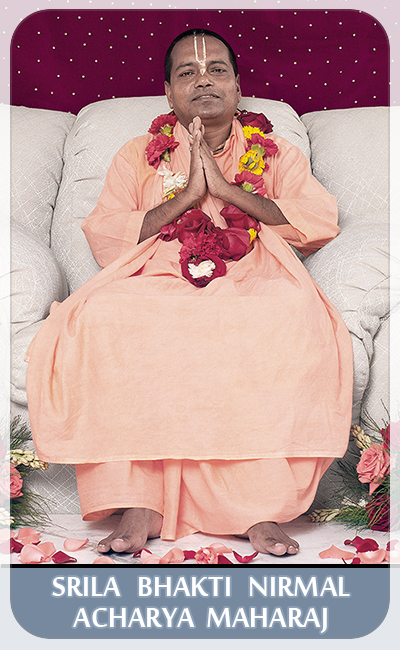


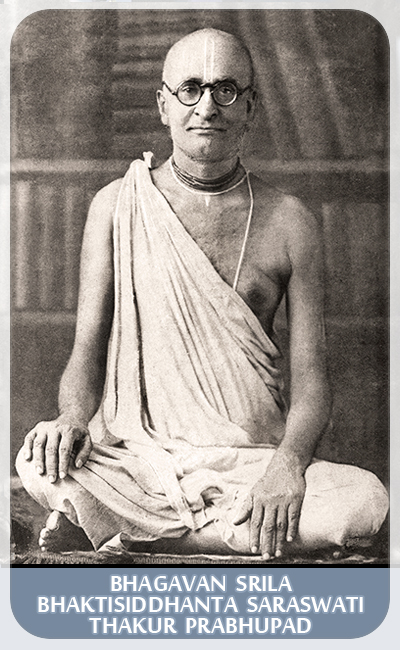
|
"The Sun Never Sets on Sri Chaitanya Saraswat Math":
|
| ABOUT US | GUIDANCE | LIBRARY | DAILY PRACTICE | PHOTO | CALENDAR | CONTACT | বাংলা |
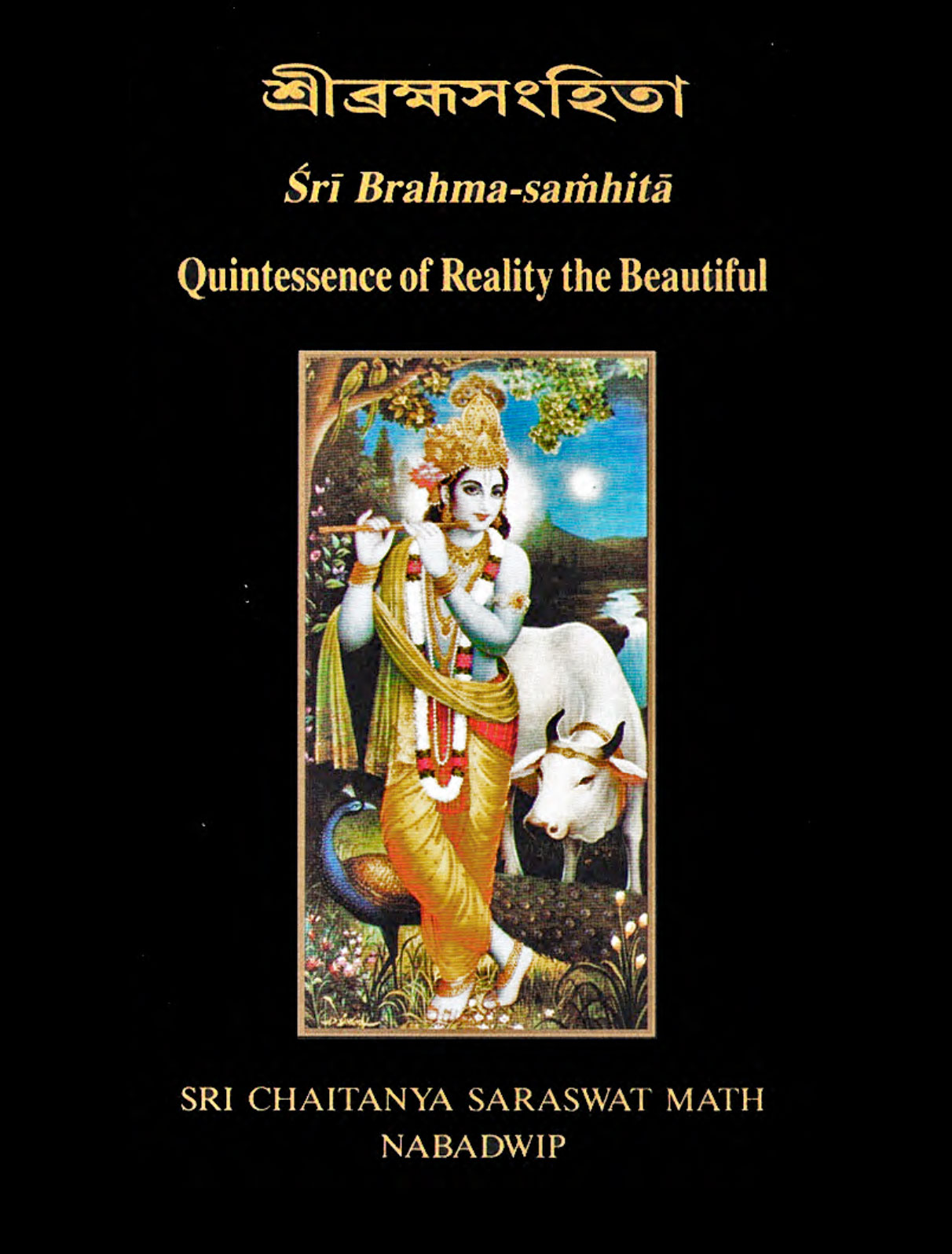
SRI BRAHMA-SAMHITA
Verse 16
ahankaratmakam visvam tasmad etad vyajayata [16]
Translation: This world of mundane ego has been born of Sambhu. This is Sambhu’s function in relationship with the jivas.
Purport: The most original unadulterated entity is the Supreme Personality of Godhead, the all-truth, free from any conception of separate egoism. The separate masculine organic egoism, that is, the separate symbolic existence that appears in the mundane world, is only an illusory reflection of that pure existence; and represented by the original Sambhu, that existence unites with the distorted representation of Ramadevi, the mayik, or mundane, female womb receptacle principle; at that point, Sambhu is represented as the efficient cause only in terms of elementary matter. Again, when in the course of evolution all the universes are manifest the evolved conception of Rudra also appears within the entity of Sambhu who is, as previously explained, born from the brow of Maha-Vishnu; however, the entity of Sambhu is constitutionally egoistic (ahankaratmaka) in all circumstances.
When the endless jivas—who are sparks of chit, or transcendental consciousness, emanating from the chit rays of Paramatman—identify themselves in the (pure) ego of exclusive servitors of the Supreme Lord, their relationship with the mayik world no longer endures; they become members of the Vaikuntha world. When they forget that ego and want to become enjoyers of Maya, the egoistic principle of Sambhu enters their existence and gives them the frame of reference of being separate enjoyers.
Thus, Sambhu is the basic truth underlying the egoistic world and the mundane bodily ego of the jivas.
•
For Reader's Appreciation
•
Feelings of Appreciation
•
Prologue
•
Translator's Note
•
Illumination
•
Verse 1
•
Verse 2
•
Verse 3
•
Verse 4
•
Verse 5
•
Verse 6
•
Verse 7
•
Verse 8
•
Verse 9
•
Verse 11
•
Verse 12
•
Verse 13
•
Verse 14
•
Verse 15
•
Verse 16
•
Verse 17
•
Verse 18
•
Verse 19
•
Verse 20
•
Verse 21
•
Verse 22
•
Verse 23
•
Verse 24
•
Verse 25
•
Verse 26
•
Verse 27
•
Verse 28
•
Verse 29
•
Verse 30
•
Verse 31
•
Verse 32
•
Verse 33
•
Verse 34
•
Verse 35
•
Verse 36
•
Verse 37
•
Verse 38
•
Verse 39
•
Verse 40
•
Verse 41
•
Verse 42
•
Verse 43
•
Verse 44
•
Verse 45
•
Verse 46
•
Verse 47
•
Verse 48
•
Verse 49
•
Verse 50
•
Verse 51
•
Verse 52
•
Verse 53
•
Verse 54
•
Verse 55
•
Verse 56
•
Verse 57
•
Verse 58
•
Verse 59
•
Verse 60
•
Verse 61
•
Verse 62
•
Verse Contents
Download (epub)
Download (pdf)
Sitemap | Contact us | About us