
Our Disciplic Succession: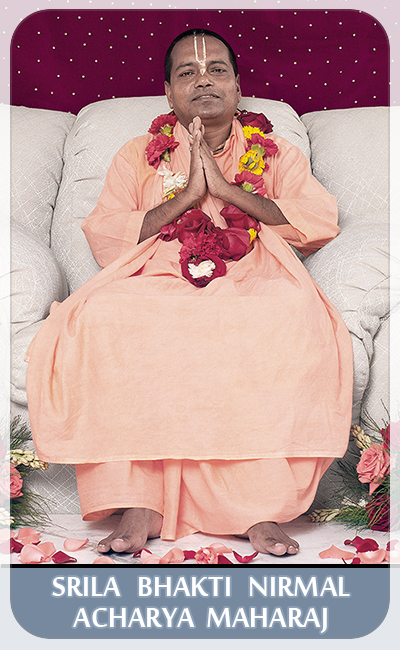


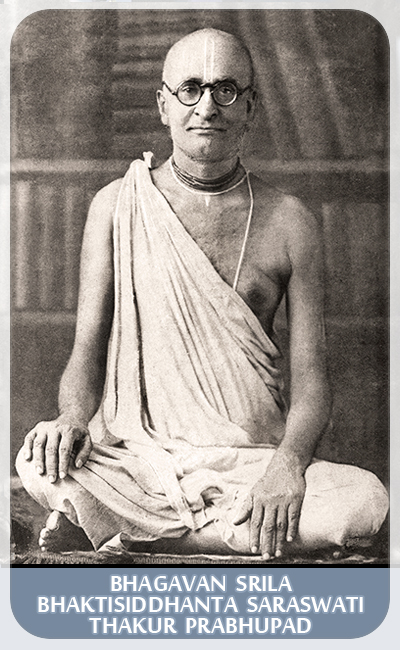
|
"The Sun Never Sets on Sri Chaitanya Saraswat Math":
|
| ABOUT US | GUIDANCE | LIBRARY | DAILY PRACTICE | PHOTO | CALENDAR | CONTACT | বাংলা |
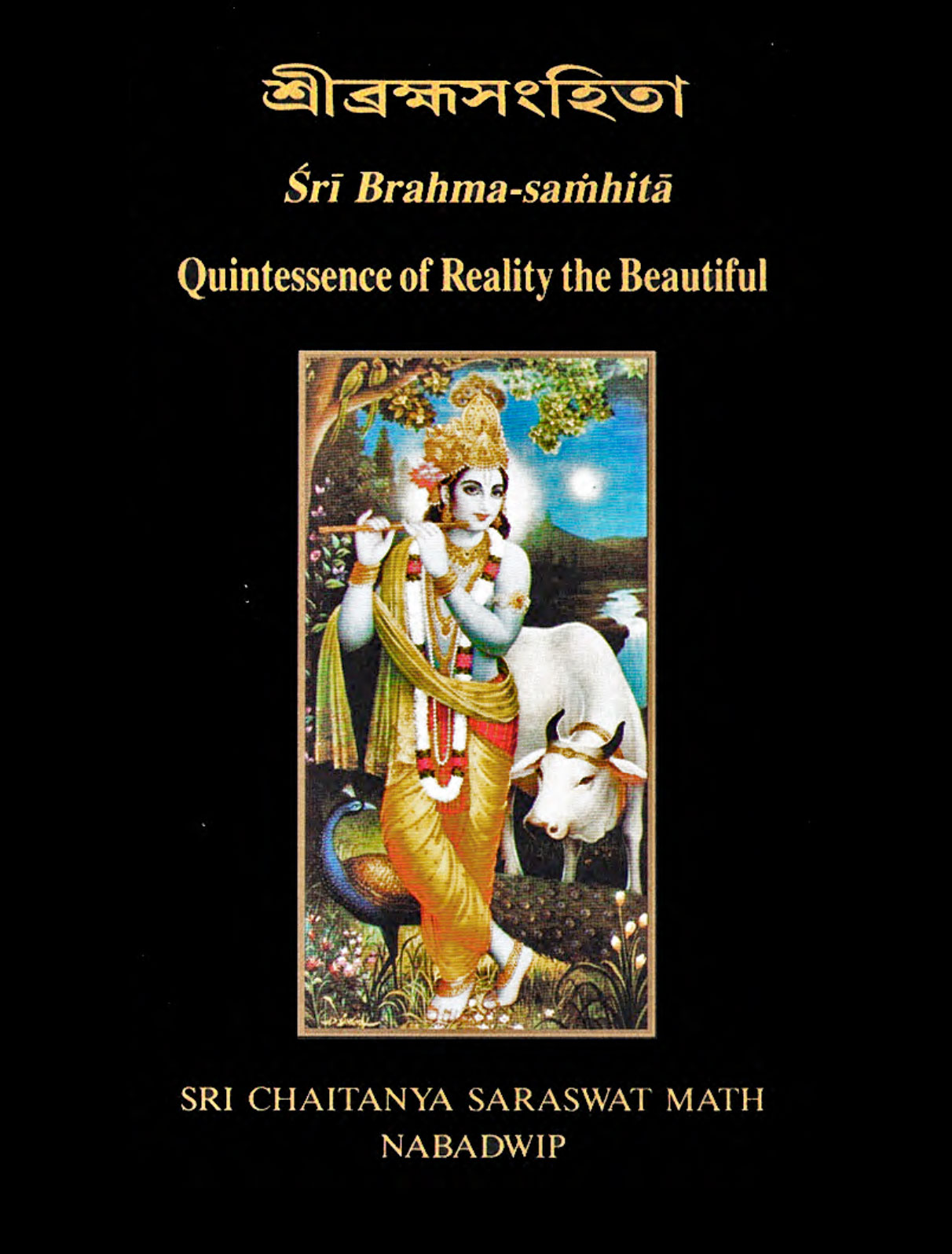
SRI BRAHMA-SAMHITA
Verse 55
yam krodha-kama-sahaja-pranayadi-bhiti-
vatsalya-moha-guru-gaurava-sevya-bhavaih
sanchintya tasya sadrsim tanum apur ete
govindam adi purusam tam aham bhajami [55]
Translation: Those who cultivate their thoughts of Him through anger, amour, natural friendship, fear, parenthood, delusion, reverence and servitorship attain to bodies of a form and nature appropriate to the mood of their meditation. I worship that Primeval Lord Govinda.
Purport: Devotion is generally of two types: regulative and spontaneous, or vaidhi and ragatmika. Devotion of preliminary faith aroused by following the instructions of the guru and the scriptures is actuated by obligation to scriptural injunctions, and so devotional sentiment is always limited in that sphere. However, such regulative devotion becomes loving spontaneity when the devotee’s attempts to please the Lord by his service gradually deepen. When bhava, or the budding stage of divine love, is aroused, the devotee can become a recipient of Krishna’s grace. To attain this stage takes much time, and such an attempt through devotional service regulated by reverence and scriptural edicts is known as vaidhi-bhakti.
Ragatmika-bhakti, devotion based on the pure heart’s sentiment or instinctive attachment, is superior. It bears fruits very swiftly and is the attractor of Krishna Himself. The various forms it takes are described in this sloka.
Santa-bhava, or the heart’s aptitude for peacefulness in reverence; dasya-bhava, or the heart’s aptitude for servitude in submission; sakhya-bhava, or the heart’s aptitude for friendship in natural affection; vatsalya-bhava, or the heart’s aptitude for parenthood; and madhura-bhava, or the heart’s aptitude for amorous love—these five are in the scope of ragatmika-bhakti.
Despite being spontaneous impulses (ragatmika), anger, fear and delusion are not devotion (bhakti) because these are hostile sentiments unconducive to devotion. Anger is seen in demons like Sisupala, fear is seen in demons like Kamsa, and delusion is found in the pandits of the mayavadi school. They all respectively have the feelings of anger, fear, and complete self-forgetfulness in identifying themselves with Brahman. But none of these sentiments are conducive to devotion for the Lord, so none can be admitted to have the qualification of devotion. On the other hand, although of the above-mentioned five rasas (santa, etc.), in the mood of peacefulness, or santa, there is a predominance of indifference—it is almost devoid of devotional sentiment—it is nonetheless reckoned as devotion due its favourability, however slight. There is abundant devotional sentiment in the other four moods.
In accordance with the Lord’s promise in Sri Gita to reciprocate the attitude of a soul’s surrender—ye yatha mam prapadyante tams tathaiva bhajamy aham—those who foster the sentiments of anger, fear and delusion in relationship to the Lord attain to the swoon of sayujya-mukti, or ‘liberation by merging.’ The adherents of santa attain to forms conducive to absorption in Brahman and Paramatman. The adherents of dasya and sakhya attain to appropriate male or female forms according to their qualifications. The adherents of vatsalya attain to forms appropriate for fatherly or motherly sentiments. And the adherents of srngara attain to the pure forms of gopis, or spiritual milkmaids, of Vraja.
•
For Reader's Appreciation
•
Feelings of Appreciation
•
Prologue
•
Translator's Note
•
Illumination
•
Verse 1
•
Verse 2
•
Verse 3
•
Verse 4
•
Verse 5
•
Verse 6
•
Verse 7
•
Verse 8
•
Verse 9
•
Verse 11
•
Verse 12
•
Verse 13
•
Verse 14
•
Verse 15
•
Verse 16
•
Verse 17
•
Verse 18
•
Verse 19
•
Verse 20
•
Verse 21
•
Verse 22
•
Verse 23
•
Verse 24
•
Verse 25
•
Verse 26
•
Verse 27
•
Verse 28
•
Verse 29
•
Verse 30
•
Verse 31
•
Verse 32
•
Verse 33
•
Verse 34
•
Verse 35
•
Verse 36
•
Verse 37
•
Verse 38
•
Verse 39
•
Verse 40
•
Verse 41
•
Verse 42
•
Verse 43
•
Verse 44
•
Verse 45
•
Verse 46
•
Verse 47
•
Verse 48
•
Verse 49
•
Verse 50
•
Verse 51
•
Verse 52
•
Verse 53
•
Verse 54
•
Verse 55
•
Verse 56
•
Verse 57
•
Verse 58
•
Verse 59
•
Verse 60
•
Verse 61
•
Verse 62
•
Verse Contents
Download (epub)
Download (pdf)
Sitemap | Contact us | About us